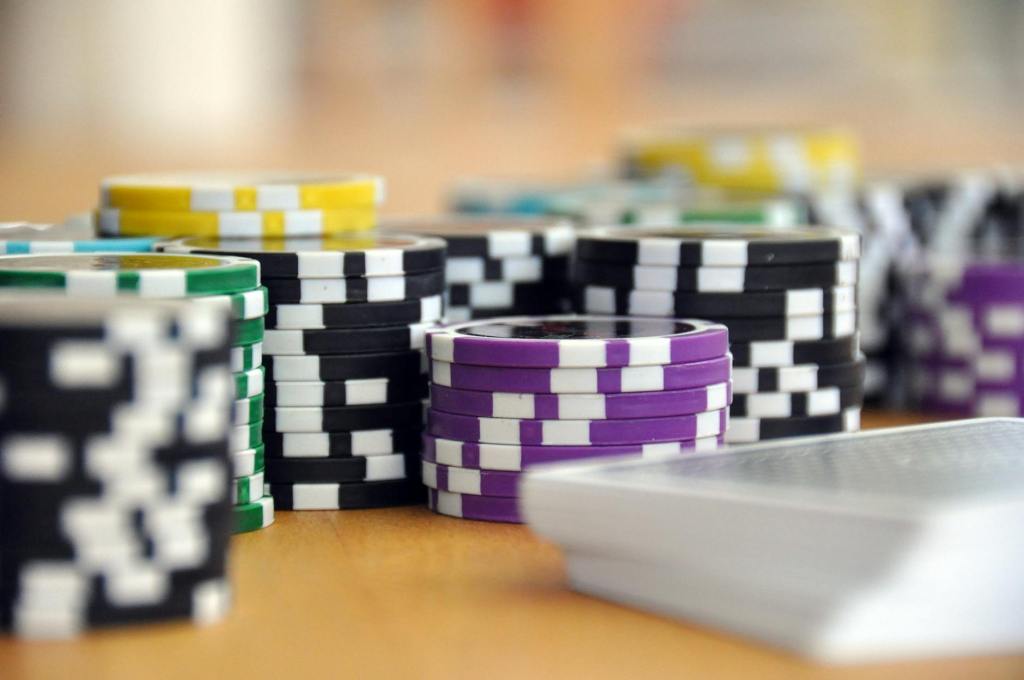
I’m currently interviewing at a quantitative trading firm that heavily incorporates poker theory into their trading philosophy. I find this uniquely fascinating, so I’ve decided to explore it a bit in this post.
Poker and trading might seem like completely different worlds, but beneath their surface differences lie some striking similarities. Both are games of skill and chance, requiring a deep understanding of probability, psychology, and risk management. Savvy traders have long recognized the potential of integrating poker theory into their stock and derivatives trading strategies to grow their edge. In this post, I’ll explore the key concepts of poker theory and how they can be applied to improve your trading.
- Calculated Risk-Taking
One of the fundamental principles of poker theory is making calculated decisions based on available information. Similarly, successful traders analyze market trends, company fundamentals, and technical indicators before making a trade. Like poker players, they understand that taking unnecessary risks without a solid “reason” is akin to gambling. The greater edge you have in a trade, the higher the expected value of the bet you’re placing. The concept of edge neatly translates over to poker.
- Understanding Probability
In poker, players assess their odds of winning a hand based on their cards and the community cards on the table. Likewise, traders gauge the likelihood of a stock or derivative’s price movement. Bets are placed based on risk to reward (expected value). Similarly to a poker hand, traders can recognize where they are in relation to other market participants – otherwise known as “knowing where they are in a hand”. Do they have an easy “layup” trade, say, based on overwhelmingly positive breaking news, which would be akin to getting dealt a pair of aces, therefore giving them a high winning probability? Or do they have rubbish cards that make no sense to bet on after the turn – in trading, this would be realizing that a trade no longer makes sense, and getting out of it. By incorporating probability theory, traders can make more informed choices and manage positions better.
An interesting note
In markets and poker, the biggest exchanges of money occur when both sides have high confidence but one side gets it wrong. (Check out my previous post on market-tracking strategies where I covered this concept in more detail) In poker, especially at lower skill levels, not all players always know where they are in the hand relative to other players. In fact, learning to conceal the strength of your hand becomes an essential skill as you gain experience. The same goes for markets, but the majority of market participants are well informed professionals. Back to my point – there can be several reasons for one side getting it completely wrong, but information asymmetry is the best explanation. So, in order to beat others, you need to know when your opponents have better information. Which you can only do if you’re aware of better information, which if you had, would be equal to the level information your opponents have. Therefore, you cannot predict when others have better information than you, because it requires you to be aware of said information, meaning you would also have it – so prediction is physically impossible. Thus, the next best way to solve this problem is to hedge risk – make sure that when you lose, not if, you aren’t all in on a single hand or trade, and you survive to play another day.
- Reading Market Psychology
Poker players observe opponents’ behavior, looking for patterns and tells that might reveal the strength of their hands. In trading, understanding market psychology is crucial. Recognizing trends, sentiment shifts, and the impact of news and events on the market can help traders anticipate price movements and make higher quality decisions. In poker, you can beat a player with a better hand by exploiting his or her psychological weakness. In trading, the market ultimately reflects the sentiment of the group that has the “stronger hand” (those willing to bet more money) – be it Bulls or Bears. The reason poker and financial markets are non-deterministic is because of the underlying uncertainty of participants- no one knows who has the stronger hand, so to speak. This concept also ties into my previous post about markets being a self-fulfilling prophecy, where the participants with larger bankrolls tend to dictate market action by placing large bets in the direction they believe is “correct”, which when combined with other large players, pushes market prices in the same direction they bet on. This mechanism is not the same as market manipulation, rather, it is an emergent property of multiple participants acting on similar information and uncertainty. The exact same phenomenon occurs in poker when several participants know where they are in the hand, so they correctly fold or raise, in effect “pushing” the remaining players to success (or failure).
- Managing Emotions & Emotional Biases
This will be the briefest section as it’s the most obvious similarity between trading and poker. Both poker players and traders face the timeless endeavor of managing emotions. Fear, greed, and over(under)confidence can lead to irrational decisions and losses. The best traders and poker players know how to keep their emotions in check and how to stick to their strategies in the face of uncertainty. It’s not about not having emotions- it’s about knowing what exactly you’re feeling, being able to discern why, and then acting in the way you should, despite your feelings.
- Position Sizing and Bankroll Management
Poker players change bet sizes based on their confidence in a scenario and pot odds, which is similar to risk and expected reward. Similarly, traders size positions and manage risk according to how likely a trade is to be profitable and their conviction. Ironically enough, the point of gambling is to reduce the amount of risks taken – trading and poker are paradoxical games by nature. The highest performers understand how to effectively strike a balance within this paradox.
Conclusion
Integrating poker theory into trading as an additional perspective in your toolbox can improve decision-making processes, and by extension improve your performance. Good poker players and successful traders are not too different from each other – they must master similar skillsets. In these two games of random chance, winning consistently is about creating systems that minimize randomness to make the best choices possible.
 Eclipse Technologies
Leave a comment